
25 Best Things to Do in Porto in 2020 Portugal
Fortified port wine is still stored in warehouses on the south bank of the Douro and, if you follow the river to the ocean, you will reach the elegant Foz do Douro neighborhood, where you will find modern beaches and restaurants.
1. Cais da Ribeira

Source: flickr
Cais da Ribeira
There are bars and restaurants around every corner, and these also line the riverside sidewalk.
Youll get a perfect shot of the iconic Louis I Bridge from here, and as you pass the arcades, theres a confusing maze of steep streets and stairs between pastel-painted houses in different states of conservation.
2. Serralves Museum and Village

Source: flickr
Serralves Museum and Village
First there is the villa, Casa de Serralves, a graceful Art Deco property built between 1925 and 1944 and with designers like Charles Siclis and René Lalique recruited to create the interiors.
Then across the park is the Museum of Contemporary Art, opened in 1999 for high-level temporary exhibitions.
There are usually four or five at the same time for current and former artists of modern and contemporary art, from Joan Miró to Liam Gillick.
3. Louis I Bridge

Source: flickr
Louis I Bridge
There is a panoramic view of Cais da Ribeira from the upper level, which is also used by the Porto railway line.
After that, you could board the Funicular dos Guindais to descend to the waters edge.
And if you havent seen enough, cross the lower deck for pedestrians and local road traffic.
4. St. Francis Church

Source: wikimedia
St. Francis Church
The interiors have been redecorated from 1500 to 1700 and have some of the most luxurious golden woods you could expect to see.
The ancient Gothic vaults, walls and pillars are covered by carved panels representing birds, cherubs and foliage.
5. Stock Exchange Palace

Source: flickr
Stock Exchange Palace
You have to go to understand the richness of sculpture, decorative sculptures, plaster, frescoes, chandeliers and tiles.
The Arab Revival Moorish Hall The Arab Hall is almost overwhelming, while the monumental courtyard of the Patio of Nations is illuminated by an octagonal glass and metal roof.
6. Clergy Church

Source: flickr
Clergy Church
It is a beautiful monument, with delicate sculptures all the way down and a clock so high you need to take a few steps to read it correctly.
This was the last section of the church to be completed and dates from 1763, with a design inspired by the towers of Tuscany.
If you dont mind the queue and the 240 steps, youll be rewarded with a full view of the city from the top.
7. Liberty Square

Source: flickr
Liberty Square
Liberty Square was traced as a new urban layout in the 18th century and bounded to the south by the Palacio das Cardosas, an 18th century palace transformed into a hotel.
There is an equestrian statue of Pedro I of Brazil, remembered as a democratic reformer.
The surrounding streets are some of the most chic in the city, with imposing civic buildings, designer boutiques and the Belle Époque Majestic Café on Santa Catarina Street.
8. House of Music

Source: flickr
Music House
This is one of the rare music venues that is also worth seeing when no one is playing.
You can go on a 1,300-seat venue tour, which tore open the auditorium design rule book and has two walls made entirely of glass.
In a few days you can hear the orchestra rehearsing, and if that stimulates your appetite for high culture, you can dress at night to hear famous soloists and the Porto Symphony Orchestra.
9. Foz do Douro

Source: flickr
Foz do Douro Lighthouse
There is a long promenade with palm and pine trees and a pergola that you can recognize if youve been to Nice.
The Pergola da Foz was installed in the 1930s, when the mayors wife fell in love with the Promenade des Anglais.
The Lighthouse Molhe do Douro Lighthouse, in turn, has guided vessels in and out of the Douro for 120 years before being deactivated in 2009. New modern restaurants have appeared this quarter a week, and when the sun is setting could not ask for one more. Romantic setting for a walk.
10. Porto Cathedral

Source: flickr
Porto Cathedral
You will arrive at Terreiro da Sé, a terrace that allows you to survey the citys roofs and monuments, such as the Clérigos Church Tower.
Despite undergoing many changes over time, the cathedral has retained great pieces of its original 12th century architecture.
When it was built, it would play a defensive role, as you can tell from buttresses, arrow handles, and battlements.
Inside is a narrow Romanesque nave and choir, leading him toward the apse, which received an opulent baroque redesign in the seventeenth century.
11. Beaches

Source: flickr
Matosinhos Beach
On a hot day, you can dip your fingers in the living Atlantic and clear your senses in the breeze.
If you want to include some of the farthest beaches within minutes of the city, you have at least 10 to choose from, many of which fly the Blue Flag every year.
The most convenient is Matosinhos, just after Parque da Cidade and with a huge bay that seems limitless when the tide is low.
If you like to travel a little, dont miss the city of Miramar, which has a beautiful 17th century chapel in the rocks among its huge golden sandy beaches.
12. Fernandina Wall

Source: wikipedia
Fernandina Wall
And although it belongs to the World Heritage, it is an attraction little valued by tourists.
You can get into the battlements at Largo 1. December, and at the entrance of the wall is surrounded by a beautiful little garden with orange trees.
When walking, UNESCO signs will give you a little insight into the medieval harbor.
But best of all, the view of the Douro here is unbeatable.
13. Crystal Palace Gardens

Source: wikimedia
Crystal Palace Gardens
These gardens were designed to complement this palace and were landscaped by the German Emile David.
Its design is still in place, and there are allegorical fountains and sculptures for the seasons.
The gardens are planted with gingko, pines, camellias, rhododendrons and beeches, and your path can be crossed by a peacock or two.
In the center of the park, the former palace has been replaced by the semi-spherical Rosa Mota Pavilion, which has hosted exhibitions in the past but is awaiting renovation.
14. St. Clare Church

Source: flickr
Santa Clara Church
It has a similar history to other religious buildings in the city, undergoing an extravagant update in the first half of the eighteenth century.
Gleaming against the red marble are gilded moldings on the vaults and gilded wood carvings on the walls with such meticulous detail that it is difficult to absorb everything.
In Portugal, this style is known as “Joanino Baroque”, coming from the reign of John V, when the Portuguese Empire was at the height of its prosperity.
15. City Park

Source: tripadvisor
citys park
After hours zigzagging through the crowd, if you need a place to walk or cycle, come to these pine woods and abundant lawns.
One motif throughout the park is piles of rectangular granite stones that look like ancient foundations.
It also uses Parque da Cidade as a green detour on its way to Praia do Matosinhos.
16. Soares dos Reis National Museum

Source: flickr
Soares dos Reis National Museum
Many of these pieces are still on display, while much of the prior art was taken from followers of deposed King Michael I. It is named by António Soares dos Reis, a 19th century sculptor from Vila Nova de Gaia, on the south bank of Rio de Janeiro. the Douro.
There are some pieces by Soares dos Reis, as well as other distinguished Portuguese painters and sculptors such as Silva Porto, Vieira Portuense, Domingos Sequeira and Miguel Ângelo Lupi.
17. Quinta da Macieirinha Romantic Museum

Source: visitporto
Quinta da Macieirinha Romantic Museum
Its most revered resident was Charles Albert of Sardinia, who spent the last months of his life in exile here in 1849. The house was kept as a museum to open a window on 19th century noble life.
This attraction opened in 1972, and Charles Alberts great-grandson was called upon to help the city choose furniture and décor to make it as authentic as possible.
18. Douro River Trip

Source: flickr
Douro Boat Tour
And most people who spend some time beside the Douro agree that there is something special about the river.
Around Ribeira, one-hour cruises are offered for around € 15, and your guide will give you some tips on the south banks port warehouses, the northern landmarks of Porto and the various bridges.
Upstream, on the eastern edge of the city, is the Maria Pia Bridge, ten years older than Louis I and built by Gustave Eiffel.
19. Port Wine

Source: winetourismportugal
Real Companhia Velha
These are located on the south bank of the Douro in Vila Nova de Gaia.
A few, like the Royal Old Company, Caves Sandeman, and Taylors Port, have histories dating back hundreds of years and have museums that document their history.
As for wine, it becomes fortified by the addition of brandy, which stops fermentation and helps maintain its sweet taste.
From them it is stored in oak barrels for anything between two years and four decades, depending on the style.
20. FC Porto Museum

Source: matherandco
FC Porto Museum
Add to that two Champions League / European Cups and two UEFA Cup / Europa League titles and you have a museum-worthy legacy.
If you dont know much about FC Porto, youll soon realize what the team means to the city, and if youre already a fan, you can take a trip through memory, remembering big names like Deco, Mário Jardel and Teófilo Cubillas. .
The museum is located at the east stand of Dragon Stadium and celebrates iconic players, matches and titles using interactive technology and multimedia.
Available Tour : FC Porto: Museum & Stadium Tour
21. Junqueiro House Museum

Source: wikimedia
Junqueiro House Museum
In 1940, his property in the medieval quarter was donated to the city and became a museum in his honor.
You dont have to be an expert in Portuguese literature to enjoy this baroque home and garden.
Guerra Junqueiro also liked good things and accumulated exquisite Nuremberg ceramic dishes, Viana do Castelo earthenware, luxurious furnishings and a variety of sacred art, including some wonderful silver work.
22. Lello Bookstore

Source: flickr
Lello Bookstore
The building dates back to 1906, although the actual business is much older, and the store is often considered one of the best in the world.
Much of this is due to the architecture: Lello Bookstore has an Art Nouveau design, with many nods to the Gothic in its outlines, murals and spiers on the facade.
The winding wooden staircase, the ceiling tubing and the stained glass skylight inside are impressive.
And for celebrity endorsement, JK Rowling was a fan when she lived in Porto as an English teacher.
23. Carmo Church

Source: flickr
Carmo Church
What overshadows the crowd is the side facade of Carlos Alberto Square.
Except for the stonework that trims the windows and the floor, this wall is covered entirely by blue and white tiles.
These tiles form a large image that conveys the origins of the Carmelite Order and Mount Carmel in Israel.
And if you dont get tired of Portos impressive golden carving, there is more inside this church in the side chapels and above the main altar.
24. Climbing the Porto Bridge

Source: evasoes.pt
Porto Bridge Climbing
Now, although this information may be interesting, what really put Arrábida on the map is the new bridge climbing activity.
It will be equipped with safety equipment will be attached to a safety line before climbing the arch under the road intersection.
Once you reach the summit, the Douro and the oldest part of Porto will be at your feet.
Suggested Tour : Small Arrabida Bridge Climbing Tour
25. Feast of St. John

Source: sapo.pt
Saint Johns festival
If that sounds ominous, these are lightweight plastic toys that make a gentle creak.
So the air is full of noise when strangers attack each other, all in the name of good fun.
For adults, the party starts on the afternoon of the 23rd and may not end until sunrise the next morning, after fireworks, baked sardines, live music, drinks and lots of dancing.

Outros Artigos Populares no Blogue
-
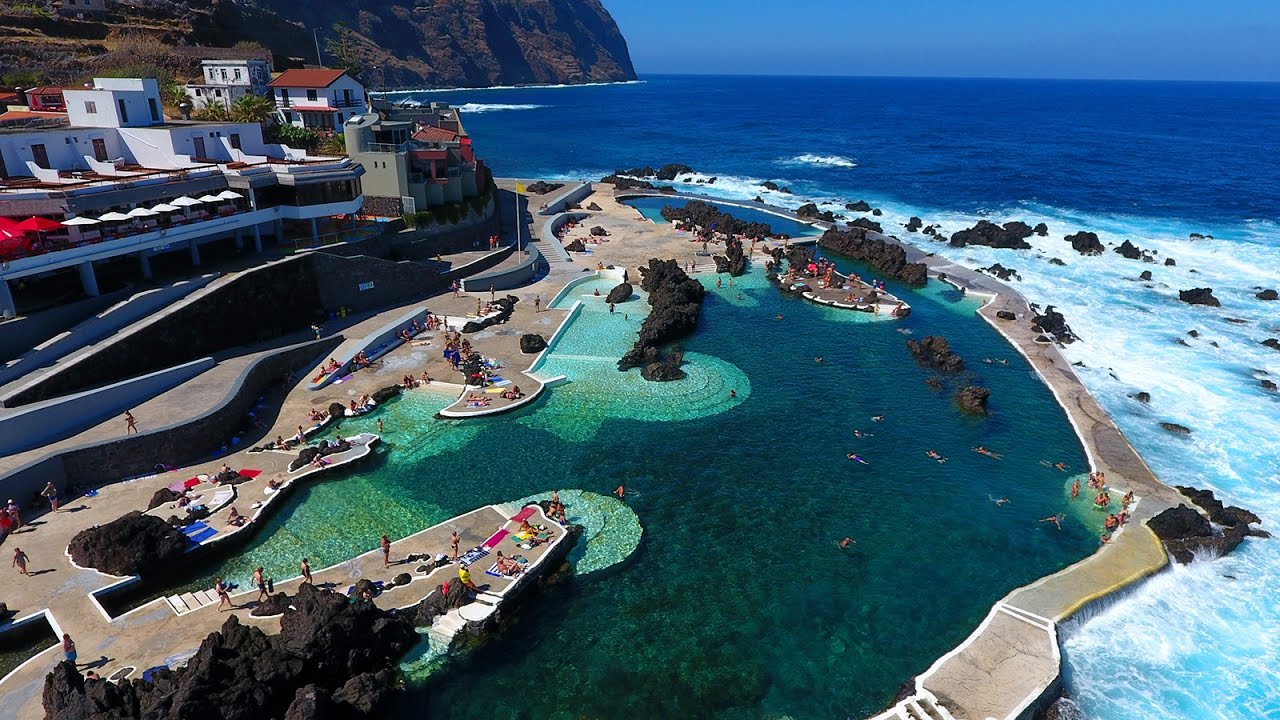

This pool is on the list of the best in the world and is Portuguese Madeira Island
CNN has elected the best tidal and seaside pools in the world. Formed over thousands of years by cooling volcanic lava, Porto Moniz natural pools... -
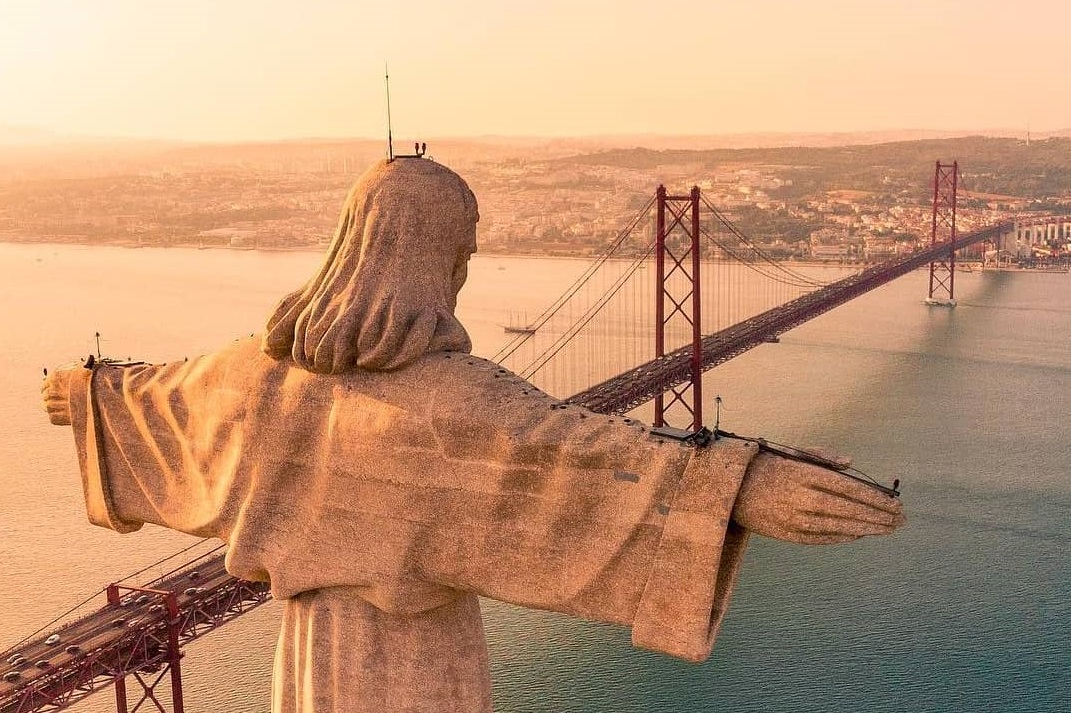
This is the most beautiful bridge in Europe
This time, the European Best Destinations travel organization made a list of the 15 most beautiful bridges in Europe and placed D. Luís, in Por... -

The 12 Best Holiday Resorts in Portugal 2020
As one of Europes top tourist destinations, Portugal is blessed with some truly remarkable vacation resorts. Most of them are along the coast, ... -
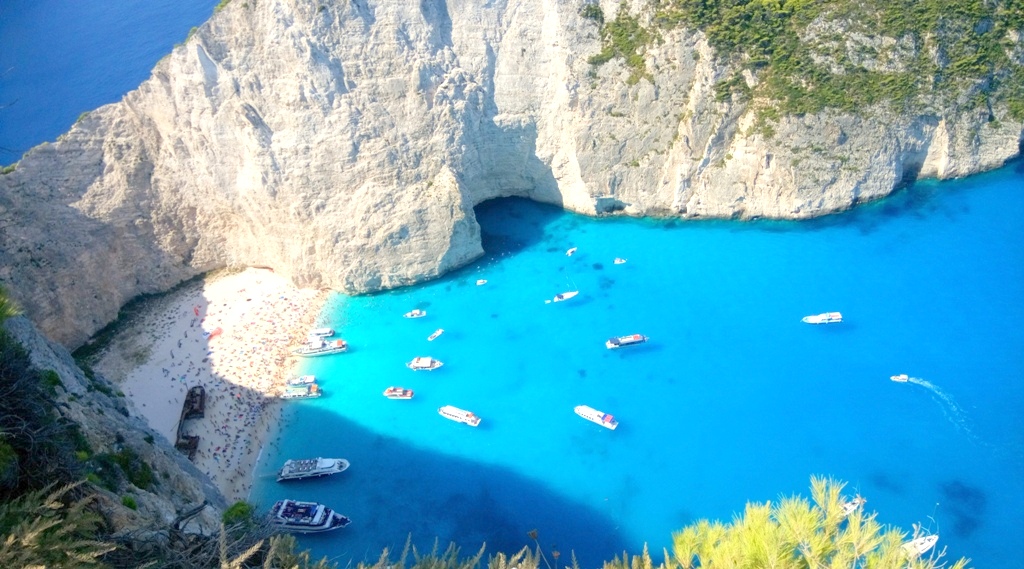
Portuguese in the list 15 of the most beautiful beaches on the planet
The elements that make up the perfect beach vary by traveler. Some yearn for the sugary sand and crystal clear waters of the Caribbean, while oth... -

12 fabulous and free things to do in Lisbon
Belem Tower Gardens In the place of this garden it worked until the middle of the century. XX the “Belém Gas Factory&rdq... -

Portuguese trail is voted the best in Europe Algarve
The trail runs along the golden cliffs along the coast for 5.7 kilometers from Vale Centeanes Beach to Marinha Beach. The Portuguese route was ... -

Forbes Considers the Azores as the Coolest Destination to Visit
Forbes magazine chose the 10 coolest countries to visit in 2019 and Portugal took the top spot - represented no less than by the Azores Archipelago. ... -
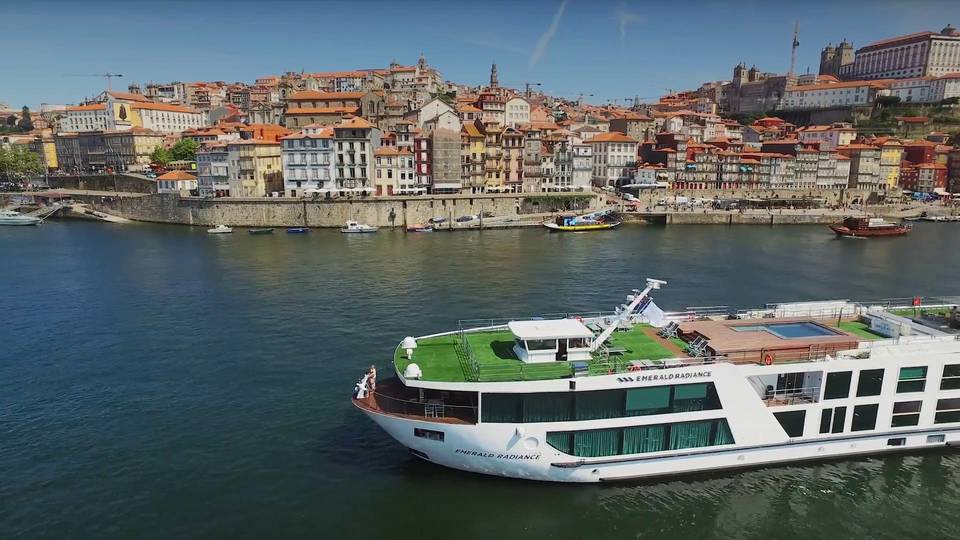
Panoramic Douro Cruise is a must-see luxury trip Portugal
Is there anything as fascinating as preparations for a long trip? There is a buzz of activity on the wharf as supplies are loaded, luggage is car...