
8 Portuguese cities you never thought to visit but should
There are 8 cities to discover in Portugal
Silves
To take
Known as the city of the Templars, there are in Tomar other testimonies of its influence, namely the Mata dos Sete Montes where, according to tradition, there were initiatory rituals, and the Church of Santa Maria do Olival that they founded in the 19th century. XII and conserves the tombs of several Masters of that Order.
The Order of the Templars was extinguished in France at the beginning of the century. But in Portugal it was transformed into the Order of Christ by proposal of King D. Dinis, later approved by the Pope, and it was determined that the immense possessions that it possessed should be transferred to the Order of Christ which came to play a leading role in the epic of the Portuguese Discoveries.
keys
They presumably built the first wall that surrounded the population; they built Trajans imposing bridge over the Bracara-Asturica road; took advantage of the warm mineral-medicinal waters by setting up thermal spas; exploited gold lumps and other soil and subsoil resources. So much importance acquired this urban nucleus at that time, which was elevated to the category of Municipality, when in the year 79 dominated Vespasiano, first Caesar of the Flavia Family. This will be the origin of Aquae Flaviae, former designation of the current city of Chaves .
It is a historic city, with a crucial role in the formation of Portugal, and which has been in existence for over a millennium since its formation, when it was designated as Vimaranes. This place-name may have originated in Vímara Peres in the mid-ninth century, when it made this place its main governing center of the county of Portucalense that had conquered for the Kingdom of Galicia and where it died. Guimarães is one of the most important historical cities in the country, and its historical center is considered a World Cultural Heritage, making it definitely one of the largest tourist centers in the region.
Elvas
The Goths and Celts were the first settlers of Elvas , this authentic fortress city, which today extends beyond its star-shaped walls. The Romans named it Helvas. In 714, the Arabs conquered it, leaving these first so many marks of its presence that some still last to this day. In the reign of D. Afonso Henriques, more precisely in 1166, Elvas was conquered to the Moors for the first time. It was later reconquered and lost again, being definitively integrated into Portuguese territory by DDSancho II in 1229.
Aveiro
Situated in the Baixo Vouga subregion, between the Atlantic Ocean and the mountainous areas of the adjoining districts, Aveiro boasts a very varied landscape, characterized by a long sandy coast, a beautiful estuary and several parks and gardens. Known as the “Portuguese Venice” , the charming city of Aveiro is crossed by a canal and is considered one of the most charming destinations in the country, thanks to its colorful moliceiros, pastel-colored Art Nouveau buildings and tranquil atmosphere. Urban - an ideal setting for your vacation.
Evora
Evora owes its original name Ebora to the Celts and is one of the most beautiful historical cities in the world. The Romans built their glorious temple in honor of Emperor Augustus and the Portuguese nobility had imposing palaces, chapels, convents, churches and the majestic Gothic cathedral.
Traces of different eras and civilizations remain virtually intact in a city where people stroll along medieval cobbled streets. Wide arcades give way to picturesque squares, where there are handicraft shops and modern brand boutiques.
Tavira
Bounded by long beaches separated by an arm of the Ria Formosa estuary and gentle rolling hills covered with sweet-smelling orchards, Tavira is one of the most delightful cities in the Algarve, with its unique architecture. It has a charming mix of beautiful buildings, cobbled streets and squares that maintain the atmosphere of a traditional Algarve fishing village. The Gilão River, which runs along the city center, amplifies its charm. The city is full of elegant buildings displaying Taviras characteristic pyramidal roofs and is crossed by an ancient bridge, allegedly of Roman origin, whose best perspective can be obtained from Praça da Repúbli

Outros Artigos Populares no Blogue
-
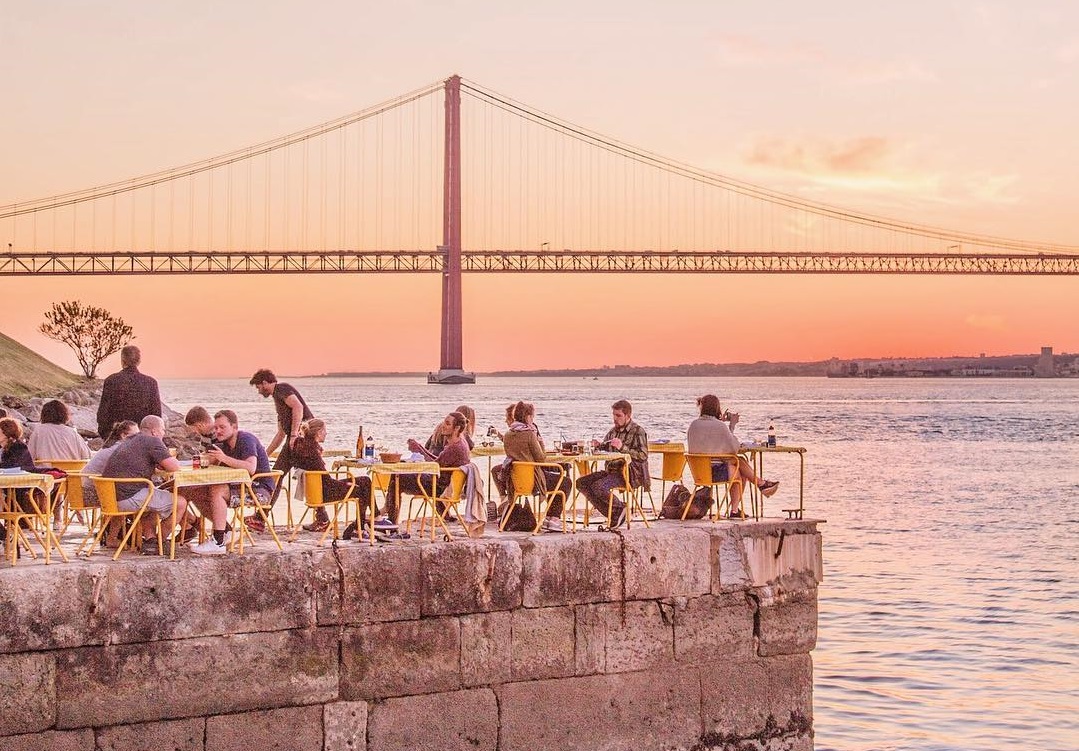

This restaurant has the best sunset in Lisbon Portugal
The best view and home-cooked food on the south bank can be enjoyed at Ponto Final Restaurant . Take the boat is a few minut... -
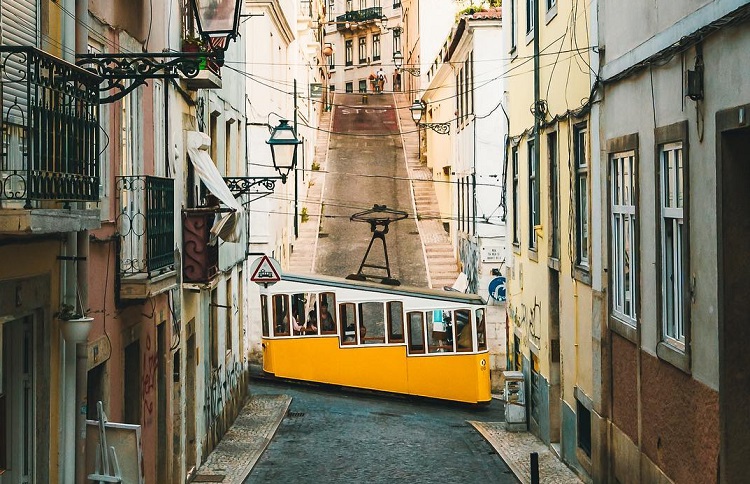
Did you know that Lisbon is not the official capital of Portugal?
Although it may seem strange… its true! Unlike the vast majority of world capitals, there is not a single official document stating that L... -
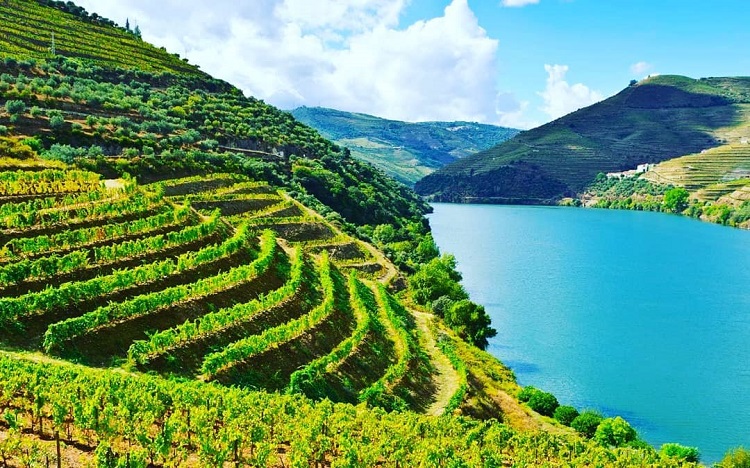
The 8 Most Beautiful Villages of the Douro Wine Region Portugal
Provesende is a charming parish located in the beautiful municipality of Sabrosa, in the fertile demarcated Douro region, where the famous Port wine i... -

Rua dos Mercadores located in the neighborhood of Ribeira is a street to visit Porto Portugal
In this street, located in the Ribeira district is a very typical, narrow downhill street, since medieval times, this street was of vital importance a... -

2 Portugueses The best red wines in the world of 2019
In its 16th edition, the Decanter World Wine Awards, the most important and disputed oenophile competition, listed which are the best wines in the wor... -
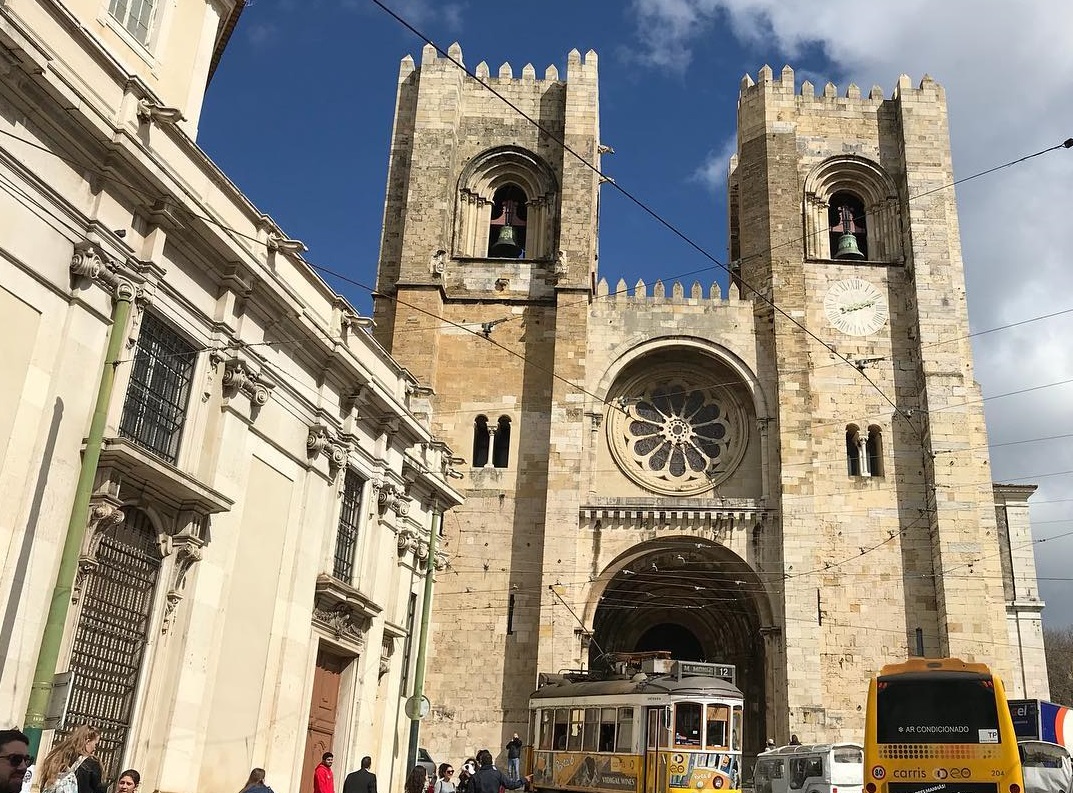
The 5 most beautiful cathedrals in Portugal
Jeronimos Monastery www.mosteirojeronimos.pt ): More than any other ecclesiastical building in Portugal, this complex represents the w... -
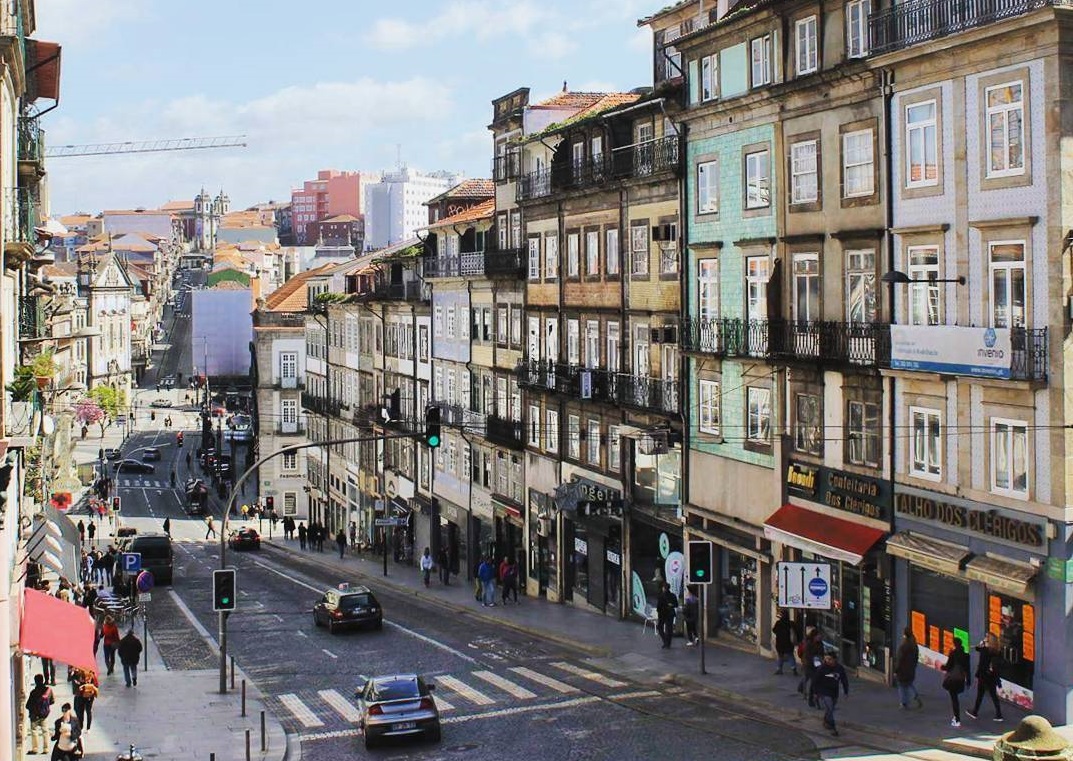
Rua dos Clérigos is what everyone has to visit in Porto Portugal
The route that established the connection between the port of Santo Elói and the port of the olive grove, outside the Fernandinas walls of Port... -

the most beautiful bridges in europe portugal has 2
are essential: they are links between two banks, sometimes between two cultures, two regions, two cities. They are there to transport...