Rua dos Clérigos is what everyone has to visit in Porto Portugal
The route that established the connection between the port of Santo Elói and the port of the olive grove, outside the Fernandinas walls of Porto, was for many centuries called the "Nativity sidewalk". His original name was to pick him up from the ancient chapel of Our Lady of the Nativity that, until 1836, existed in Praça Nova (present-day Freedom Square).
In 1731 some vacant land was donated to the Brotherhood of the Poor Clerics - made up of the fusion of the confraternities of Saint Peter ad Vincula, Saint Philip Neri and Our Lady of Mercy - to build his church, the Clerigos Church, the great work. by Nicolau Nasoni, whose tower is the ex libris of Porto.
The street surrounding the new temple was now called "Largo dos Clérigos". In 1860, when Viscount de Gouveia was appointed civil governor of Porto, he imposed the current name of "Rua dos Clérigos".
The development of the Carmelitas neighborhood, the construction of the Angel Market, the Polytechnic Academy and the Santo António Hospital have valued Clérigos Street as the main access road from Baixa, located around the current Liberdade Square. From the mid-nineteenth century, the Clerics became one of the most important shopping streets of Porto
Clergy Street
The magic of Portuguese culture and architecture is nothing more evident than the beautiful city of Porto at dusk.
TOWER, MUSEUM, CHURCH
The Clérigos architectural ensemble, classified as a National Monument since 1910, is for its Church and its Tower, one of the main points of interest, and a must for all visitors to the city of Porto.
The Church and the Tower are part of an 18th-century Baroque-inspired building that marked the citys urban setting, located on an uneven street but brilliantly exploited by Nicolau Nasoni, who managed to create a landmark building. The Church and the Tower are united by the House of the Brotherhood, which since 2014, after its musealization, is open to the public.
TOWER
In 1753, at the request of the Brotherhood of the Clerics, the Italian architect Nicolau Nasoni presented the project for a bell tower, and in 1754 would start the works of what would become the most beautiful and towering Tower, dominating the entire urban landscape of Porto. . In July 1763, with the placement of the iron cross at the top, and the image of São Paulo in the niche above the door, its construction was finally completed.
The baroque characteristics that define it are the maximum expression of the baroque spectacularity, where the typical motifs of this style give the tower movement and beauty.
Over 75m high, after climbing 225 steps and reaching the top of the tower, the view of the city dazzles. From a 360 ° perspective, the visitor enjoys a unique moment, whether day or night, when in special times, the tower opens its doors until 23h00.
The Clérigos Tower, is undoubtedly the ex-libris of the city, and an excellent viewpoint over it.
MUSEUM
The journey through the House of the Brotherhood (1754-1758), where the Museum is located, provides a return to the past, the experience of traveling through spaces that were once deprived and destined for the daily life of the Brotherhood of Clerics.
Going through the Dispatch House, the Safe Room, the Notarys Office, and the old ward, you can see that the Museum has a collection of cultural assets of considerable artistic value, from the 13th to the 20th century, which spans the collections. of sculpture, painting, furniture and jewelery. These goods are messengers of a historical and cultural heritage, whose function lost in the passage of time, gave way to its musealization.
The Clergy Brotherhood ward, which operated until the late nineteenth century dedicated to treating sick clergy, has been converted into an exhibition space, and now houses the Christus collection. This exhibition, conceived from the donation of a collection by a private collector, reveals the passion for collecting, and tells a story complemented with objects, once devoted, considered today cultural legacies of interest. They are pieces of great sculpture, painting and jewelery that praise the encounter of art with faith.
The exhibition, spread over three rooms - Passion Nucleus, Journey of Forms and Images of Christ - invites you to travel through time and space, through image and devotion .
The Museum of the Brotherhood of Clerics, has been part of the Portuguese Museum Network, since August 28, 2018.
The donation of a piece of land, located in Campo do Olival, at the time the largest port yard, allowed the Brotherhood of Clerics to build its own church.
The project of the Church of the Clerics, by Nicolau Nasoni, was approved at the meeting of the Brotherhood of the Clerics, in December 1731. The works began in April 1732, with the founding of the foundations, thus beginning the construction of what would come. to be the first church in Portugal with ellipse shaped plant. And not only. The gallery that surrounds the whole nave, making it possible to observe the church as a whole, is also a unique feature of this temple. The many existing windows let in light, which enhances the splendor of the gilded carving in the church, creating a beautiful color match with the marble.
The dome bears the coat of arms of the Brotherhood of the Clerics, in fake granite, and rests on six pilasters, with two pulpits and two bars standing out, the oldest examples of gilded wood in the church, and four side altars: the Blessed Sacrament, Our Lady of Sorrows, St. Andrew Avelino and St. Benedict.
Seventeen years later, in 1749, the building of the church was completed, but its equipping, and later the enlargement of the chapel, would extend the work in the church for a few more years.
In the background, the spacious oblong (longer than wide) rectangular chancel is embellished with a marble altar and a rococo-inspired altarpiece, with the risk of Manuel dos Santos Porto, in which a throne crowned by the image of the church prevails. patron saint, Our Lady of the Assumption. On the flanks of the altarpiece stand out the co-patrons of the Brotherhood of the Clergy, St. Peter ad Vincula and St. Philip Neri, two painted wooden sculptures.
The chancel is flanked by the chair and the two organs of Iberian or "Portuguese-style" pipes, whose construction began at the same time, was in 1774. The chair would end in 1777 and the organs only two years later.
-

Outros Artigos Populares no Blogue
-
Sustainable Travel and Ecotourism in Portugal
Ecotourism in Portugal may have been slow to arrive, but it is beginning to settle in this beautiful land. Many places are overloaded, especially...
-
Moledo Beach Portugal hides magnificent places!
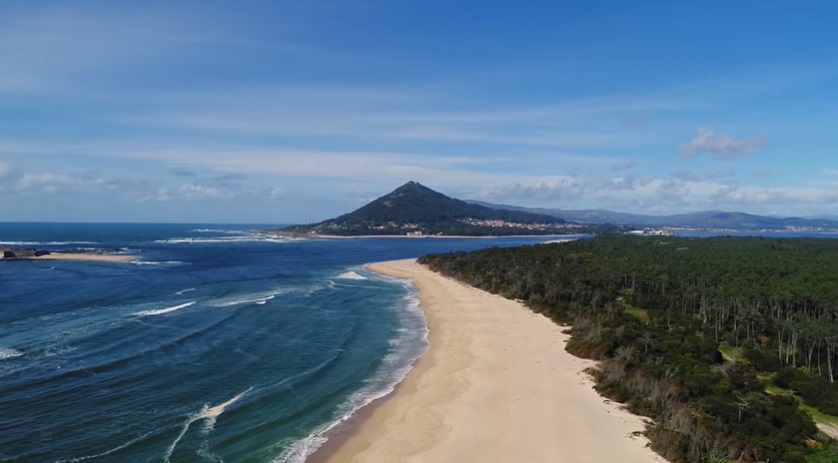
Considered by many to be the most beautiful beach in the north. Its beauty is undeniable and peculiar, the surrounding dune landscape, protected ...
-
5 experiences in Portugal to have at least once in your life
We only share 5 suggestions here and of course that is unfair to many other equally exciting destinations. Whatever the destination of...
-
The largest suspension pedestrian bridge in the world is in Portugal 516 meters long
This pedestrian structure, which led to contestation by residents, will be 516 meters long and will be suspended 175 meters from the Paiva River.
Loc...
-
Gastronomy in Portugal for travelers
In her book Invitation to Portugal, Mary Jean Kempner reaches the heart of the Portuguese diet: "The best Portuguese food is provincia...
-
Galapinhos Beach in the list of the most stunning in Europe and Dona Ana Beach in Lagos
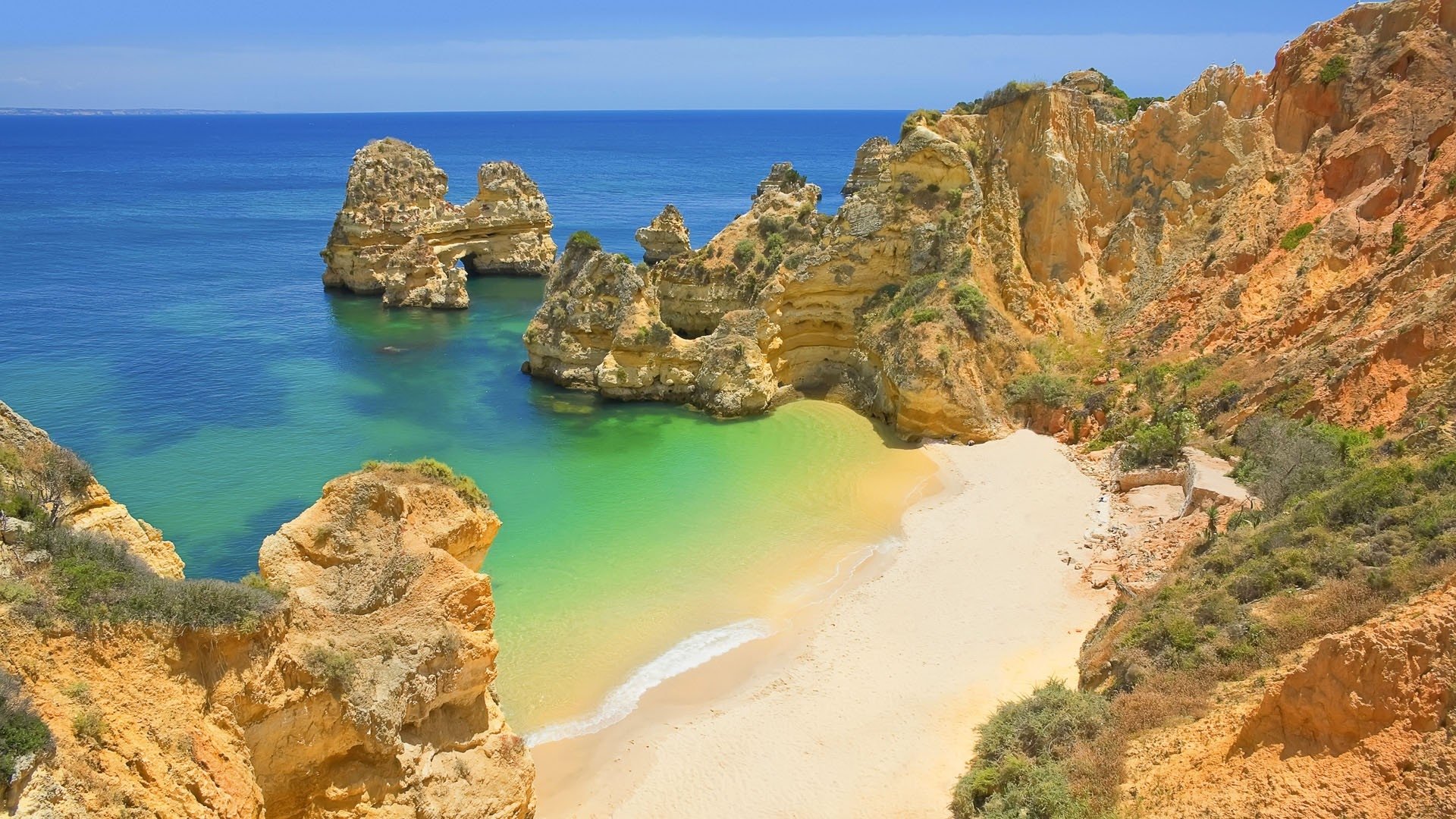
With spring in sight and summer no longer seeming to be unbeatable, the British newspaper Evening Standart has brought together the most beautiful bea...
-
These are the 10 best new restaurants in Lisbon Portugal
Forbes list, which includes ten names in total, is also the Supper at the Santa Clara Hotel 1728, or the Epur, in Chiado, with Vincent Farges, the for...
-
Are the 10 best Portuguese wines for less than 10 euros
Wine Name: José de Sousa 2012, José Maria da Fonseca Region: Alentejo Price: 7.50 / 8 euros Grapes: Grand Noir, Trincadei...